
- Diventa Premium
- Accedi
- Registrati

[Psychophysical Supervenience] «The mental supervenes on the physical in that any two things exactly alike in all physical properties cannot differ in respect of mental properties» (Kim, 1996). Kim endorses a reductive supervenience, according to which mental causation would be a mere illusion. I consider Kim’s distinction between “levels” (micro/macro) and “orders” (physical/mental) very interesting and important from a logical and metaphysical point of view to clarify the causal role of some mental properties and notably consciousness (Kim, 1998; 2006). About mind/body problem I endorse the theories of ontological monism and epistemological dualism. The discovery of the mirror neurons system (MNS) and its way of working is a good example to understand the previous theories. According to Rizzolatti and Sinigaglia (2006), it seems that perception, understanding and action are grouped together into a unified mechanism, according to which «the brain that acts is also and above all a brain that understands» (Ib., p.3). Finally, I try to show the theoretical concordance of this discovery with the supervenience reductive theory of mind claimed by Kim (1993, 1996, 1998, 2005).
Aggiunto il 09/08/2013 - 15:25 da Nicola Simonetti
Argomento: Filosofia della mente
Pagine: 92
Edizione: Lambert Academic Publishing (LAP), Saarbruecken, Germany 2012
Scritto da: Nicola Simonetti
Lingua: Inglese
Costo: 43,34 €
Casa editrice: Lambert Academic Publishing (LAP), Saarbruecken, Germany 2012
ISBN: 978-3848420469

Introduzione, traduzione e note di Alberto Tettamanti
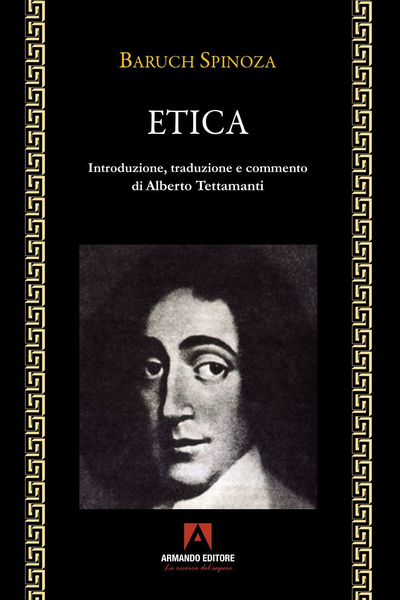
Introduzione, traduzione e commento di Alberto Tettamanti

Introduzione, traduzione e commento di Alberto Tettamanti

Introduzione, traduzione e commento di Alberto Tettamanti

Introduzione, traduzione e commento di Alberto Tettamanti

Fin dalle origini la filosofia occidentale ha cercato di liberare il pensiero dall'enorme scandalo rappresentato dal nulla assoluto, proibendo persino di nominarlo (Parmenide), oppure volgendo lo sgua..


Le ricerche filosofiche contenute in questo volume offrono una teoria generale dell’immagine. Da Deleuze a Sloterdijk: ovvero dalle superfici agli ambienti, dai gesti del corpo alle atmosfere. Discute..
